
Retail inflation cut short its three-month declining trend and inched up to 7 per cent in August mainly due to higher food prices, according to official data released on Monday. The consumer price index (CPI) based inflation was 6.71 per cent in July and 5.3 per cent in August 2021. The CPI inflation has remained above the RBI's comfort level of 6 per cent for the eighth month in a row.
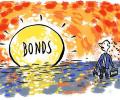
Bond markets, global as well as domestic, are likely headed towards hard times over the next three to six months, as higher vegetable prices, rising fuel costs, and improved wages may keep inflation hot, believe analysts, who expect the yields to hit 7.5 per cent in the near-term from the current 7.234 per cent. In this backdrop, they suggest investors can put in money in funds/instruments with residual maturity of 4 to 6 years, while longer-term investors can allocate cautiously to the longer end in the range beyond 7 years.

The wholesale price-based inflation declined for the fourth consecutive month to 10.7 per cent in September on softening in prices of food, fuel and manufactured items. The Wholesale Price Index-based inflation was 12.41 per cent in August and 11.80 per cent in September last year. This year, the Wholesale Price Index (WPI) touched a record high of 15.88 per cent in May. September is the 18th consecutive month of double-digit WPI inflation.

India's energy needs are expected to jump four-fold in 25 years, but it faced problems ranging from depleting fuel reserves and uncertainty in policy framework, consulting firm KPMG said on Monday.

M&M was the biggest loser in the Sensex pack, declining nearly 3 per cent, followed by TCS, Bajaj Finance, Wipro, Kotak Bank, Tech Mahindra, HCL Tech and Tata Motors. In contrast, Titan, Bharti Airtel, ICICI Bank and L&T were among the gainers, rising up to 0.93 per cent.

Vegetable rates may ease from September, led by tomato prices, which have started showing signs of correction on the back of increased supply, Reserve Bank of India (RBI) Governor Shaktikanta Das said on Wednesday. "Looking ahead, the spike in vegetable prices in July is starting to see a correction, led by tomato prices. "New arrivals of tomatoes in mandis are already softening the prices, coupled with proactive supply management in the case of onions.

In the mood for romance but don't know which movies to watch? Tamil cinema has a lot to offer on OTT, and Arjun Menon lists his favourites.
The wholesale price-based inflation eased for the third consecutive month in August to 12.41 per cent, on softening in prices of manufactured items, even as food items saw an uptick. The Wholesale Price Index-based inflation was 13.93 per cent in July and 11.64 per cent in August last year. August is the 17th consecutive month of double-digit wholesale price inflation (WPI).

The Rs 2,000 note withdrawal decision and response to it so far suggest that the move can help boost FY24 GDP growth to beyond 6.5 per cent estimated by the RBI, a report said on Monday. The real GDP growth for the first quarter of FY24 will come at 8.1 per cent with an upward bias and the Reserve Bank of India's 6.5 per cent estimate can also be exceeded, economists at the country's largest lender SBI said. "We expect Q1 FY24 GDP growth at 8.1 per cent with an upward bias due to the impact of Rs 2000 note withdrawal event...this reinforces our projection that FY24 GDP could be higher than 6.5 per cent, basis the RBI estimate," a note said.
Retail inflation dropped to 6.77 per cent in October from 7.41 per cent in the preceding month, mainly due to easing prices in the food basket, though it remained above Reserve Bank's comfort level for the 10th month in a row, according to the government data released on Monday. The Consumer Price Index (CPI) based retail inflation has remained above the 6 per cent target since January this year.

The stronger than expected monsoon has not yet softened food inflation as much as it should have and in particular, vegetable prices have been impacted by weather-driven supply disruptions, said RBI Governor D Subbarao while unveiling the first quarter monetary policy review.
Institute of Economic Growth warned on Wednesday that the rise in oil prices due to fears of war in Iraq might "hamper" the government's plan for acquiring and maintaining strategic oil reserves for 45 days and the import bill was bound to go up

Today, he lies in an unknown grave in a corner of a farmer's field in Pakistan, having given his all for his country. A riveting excerpt from Ian Cardozo's Beyond Fear: True Stories on Life in the Indian Armed Forces.

'ESG is actually a concept which cannot be applied effectively in the very short run.'

Finance Minister Nirmala Sitharaman on Wednesday said the government is keeping an eye on inflation which is purely "extraneous" nowadays because of fuel and fertiliser prices. Replying to the debat on the Supplementary Demands for Grants in the Rajya Sabha, the minister said wholesale inflation has fallen to a 21-month low. Later, the Rajya Sabha returned the Supplementary Demands for Grants to the Lok Sabha, thus completing the process of authorising the government to spend an additional Rs 3.25 lakh crore in FY2022-23.

For protein rich items such as meat and fish, eggs as well as milk and products, the inflation in May slowed compared to last month

'Unfortunately, there is no movement towards peace in Manipur.'

Minutes after taking off from a launch pad in South Texas, the rocket appears to have exploded above the Gulf of Mexico.

India's economic growth will be above 6 per cent in the current fiscal as the country has managed to strengthen its macroeconomic stability and performance even in a period of large global shocks, RBI Monetary Policy Committee (MPC) Member Ashima Goyal said on Monday. Goyal further said that a global slowdown reducing India's export growth, geopolitics fueling oil and food prices, and erratic weather are some of the continuing risks that the country faces. "India has managed to strengthen its macroeconomic stability and performance even in a period of large global shocks.

Kotak Mahindra Bank was the biggest loser from the Sensex pack, skidding 1.83 per cent, followed by Axis Bank, NTPC, Hindustan Unilever, ICICI Bank, Bharti Airtel, Reliance Industries, HCL Technologies, IndusInd Bank and Nestle. In contrast, Bajaj Finance, Bajaj Finserv, Tech Mahindra, Tata Consultancy Services, Titan, Infosys, HDFC Bank, HDFC and ITC were the gainers.

Analysts are divided on their retail price inflation forecast, with some saying the first quarter numbers will overshoot the RBI target by as much as 60 bps while others are softer in their estimate. Consumer price inflation retreated from its 15-month peak of 7.4 per cent in July to 6.8 per cent in August, much lower than the market expectations, despite vegetable prices remaining elevated at 26.1 per cent. Food inflation eased to 9.9 per cent from 11.5 per cent, led by some cooling of inflation in vegetables, cereals, pulses and milk.

Retail inflation inched up to 4.48 per cent in October due to an uptick in food prices, government data showed on Friday. The Consumer Price Index (CPI) based inflation was at 4.35 per cent in September and 7.61 per cent in October 2020.

Sounding a note of caution, the Reserve Bank said on Friday said there is a risk of high wholesale price inflation (WPI) putting pressure on the retail inflation, albeit with a lag. In its annual report, the RBI said that the cost-push pressures from high industrial raw material prices, transportation costs and global logistics, and supply chain bottlenecks continue to impinge on core inflation. "The substantial wedge between wholesale and retail price inflation amidst a sharp rise in manufactured products' inflation poses the risk of a possible passthrough of input cost pressures to retail inflation with a lag, although slack in the economy is muting the pass-through," the central bank noted.

Retail inflation softened to 6.71 per cent in July due to moderation in food prices but remained above the Reserve Bank's comfort level of 6 per cent for the seventh consecutive month. With retail inflation continuing to remain high despite a fall in prices of vegetables and edible oils, among other commodities in July, the Reserve Bank of India (RBI) might go for another rate hike in September. The Consumer Price Index (CPI) based retail inflation was at 7.01 per cent in June and 5.59 per cent in July 2021. It was above 7 per cent from April to June this fiscal.

According to the Ministry of Energy, the system of frequency of the national grid went down at 7:34 am local time, resulting in the breakdown.

Wholesale price-based inflation spiked to a record high of 15.08 per cent in April on rising prices across segments from food to commodities. The WPI-based inflation was 14.55 per cent in March and 10.74 per cent in April last year. "The high rate of inflation in April 2022 was primarily due to rise in prices of mineral oils, basic metals, crude petroleum & natural gas, food articles, non-food articles, food products and chemicals & chemical products etc. as compared to the corresponding month of the previous year," the commerce and industry ministry said in a statement.
Reserve Bank of India (RBI) on Wednesday upped inflation projection for the current fiscal to 6.7 per cent from 5.7 per cent forecast in April. RBI Governor Shaktikanta Das said the upside risk to inflation persists and the recent spike in tomato prices would fuel food inflation. Also, high global crude oil prices would add to the upside pressure on inflation. The upward revision in inflation projection comes as domestic retail inflation has remained above RBI's comfort level of 6 per cent for four months in a row, mainly due to the Russia-Ukraine war which has impacted the prices of commodities across the globe.
The wholesale price-based inflation eased to 15.18 per cent in June on lower prices of manufactured and fuel items, even though food articles remained costly. The Wholesale Price Index-based inflation was at a record high of 15.88 per cent last month and 12.07 per cent in June last year. The WPI inflation in June has bucked the three-month rising trend but remained in double-digit for the 15th consecutive month beginning April last year.
However, some analysts say RBI Governor Raghuram Rajan may delay the rate cuts amid mounting concerns over the government's fiscal health.

Capital expenditure by 54 large central public sector enterprises and five departmental arms, having a capex minimum target of Rs 100 crore, rose 93 per cent year-on-year (YoY) in the April-May period to Rs 1.39 trillion. The National Highways Authority of India (NHAI) and the Railways have started this financial year's capex cycle on a stronger note. In the first two months of FY24, the 54 CPSEs, along with the departmental arms, achieved 19 per cent of their combined budget target of Rs 7.33 trillion, Business Standard has learnt.

Embattled Sri Lankan President Gotabaya Rajapaksa had declared a state of emergency with effect from May 6 midnight, the second time in just over a month amidst growing countrywide anti-government protests over the economic crisis.

The wholesale price-based inflation eased to a five-month low of 13.93 per cent in July on easing prices of food articles and manufactured products. The WPI-based inflation softened for the second consecutive month in July, raising hopes of further decline in wholesale prices in the months to come. The Wholesale Price Index-based inflation, after scaling a record high of 15.88 per cent in May, declined to 15.18 per cent in June. It was 13.43 per cent in February. It was 11.57 per cent in July last year.
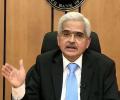
With inflation under control, the Monetary Policy Committee's (MPC's) job is to support growth because the economy had recovered well from the lows in the initial months of the pandemic, according to the panel's members, who met in the first week of this month. The minutes of the meeting show the Reserve Bank of India (RBI) governor in his statement said: "Given the sharp moderation in inflation along with a stable near-term outlook, monetary policy needs to continue with the accommodative stance to ensure that the recovery gains greater traction and becomes broad-based." Ashima Goyal, external member of the MPC, said: "The current macroeconomic configuration and its expected future evolution imply there is space for the MPC to continue to support the revival of the economy with inflation remaining in the target band."

The RBI gauges both measures of inflation when deciding on monetary policy,

The five-time prime minister was re-appointed to the job on May 12 following the political circus precipitated by the unprecedented economic crisis in the island's history.
Retail inflation declined to a one-year low of 5.72 per cent in December 2022, mainly due to softening prices of food items, according to official data released on Thursday. The Consumer Price Index (CPI) based retail inflation was at 5.88 per cent in November 2022 and 5.66 per cent in December 2021.

India is the 4th largest oil consumer after the US, China and Japan.

'I was never interested to work as Leader of Opposition but accepted the role on demand of the party MLAs'

Prime Minister Narendra Modi's state visit to the US is expected to see discussion on India's possible entry into a US-led global alliance on critical minerals, officials told Business Standard. In June last year, the US, the European Union, and other G7 partners launched the Minerals Security Partnership to ensure that China did not further strengthen its grip on supplies of critical minerals the world over. Various ministries, including the Ministry of Finance, have communicated to the Ministry of External Affairs to explore the possibility of India joining the partnership, officials said.
